Rau'ahu Royal House

Throne of the Sultan
Early Settlers of Small Mala'ita
Settlement on Small Mala’ita island began around three millennia ago (i.e, 3,000 years ago), during the great migration of Austronesian-speaking peoples who crossed the Pacific in double-hulled canoes. Drawn by the island’s protected bays and rich marine life, they established some of the earliest coastal communities in Southern Malaita.
These early settlers brought technologies that transformed the island: polished stone tools, pottery traditions, horticulture, and a deep knowledge of the ocean. Villages formed along the sheltered coves, each tied to a founding ancestor whose story would define land rights for generations. As the population grew, these communities organized into distinct clan groups, each maintaining sacred sites, ceremonial platforms, and pathways linking land to lineage.
Over the next centuries, the Small Mala’ita island became a hub of cultural development. Canoes launched from Maramasike’s shores to trade with neighboring regions such as East Are’are, and other Eastern regions. Shell money, food, and marriage alliances strengthened relationships, while rituals honoring ancestral spirits shaped daily life. Ceremonies connected families to the land, ensuring the continuity of identity across generations.
By the time European traders and missionaries arrived in the late 19th century, the people of Small Mala’ita were part of a vibrant social world. Yet the arrival of new forces brought significant changes. Christianity spread, traditional rituals declined, and villages shifted under the influence of mission teachers and colonial officers. Even so, the deep structure of clan identity — inherited land, ancestral stories, and sacred places — remained unbroken.
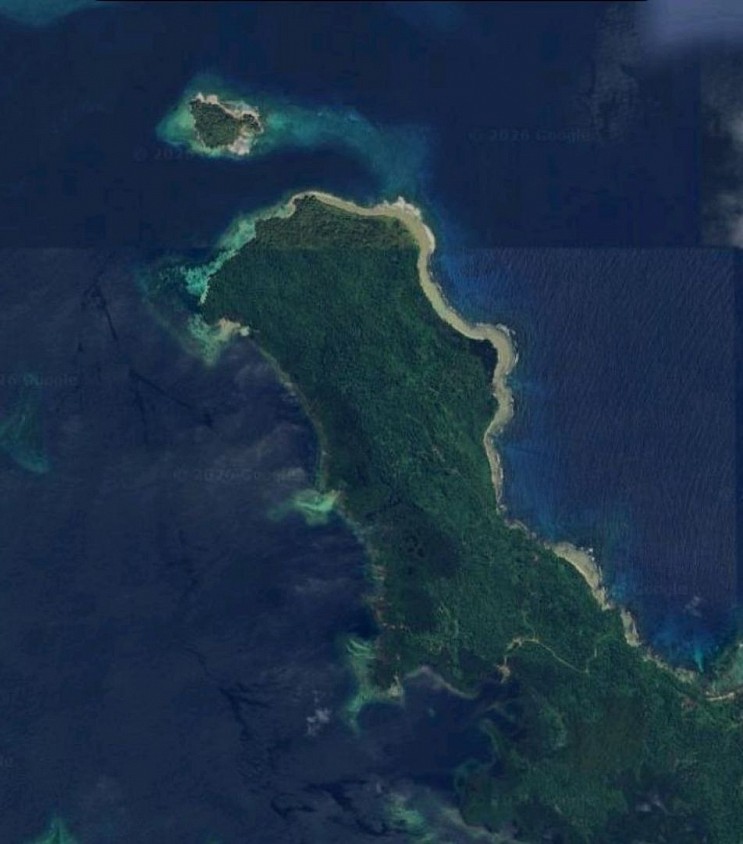
Ārai Peninsula
Human History of Ārai
The Ārai Peninsula of Small Mala’ita stands today as a quiet landscape, but beneath its calm surface lies one of the oldest human histories in the region. The first settlement began around 1,860 years ago, during the migration of Ūtai Saso Ou’ou Masike, who crossed the land by foot from Hunuri, in central Small Mala’ita, to the Land of Ārai. Drawn by the peninsula’s protected bays and rich marine life, he established their settlement and named it Hunuri (after Hunuri Tōhi). Thus, Hunuri became the earliest community in Ārai Peninsula.
The Ārai Peninsula forms one of the ancient strongholds of human settlement in Small Malaita, a region where the lineages of many present-day families trace their origin. For over one thousand years, its shores have witnessed the rise of clans, the forging of alliances, and the shaping of a proud cultural identity.
From the earliest ancestors who landed on its coves, the peninsula grew into a center of leadership and cultural authority. Clan custodians guarded its sacred stones, ancestral shrines, and ritual grounds, maintaining traditions handed down through unbroken generations. Through oceans and centuries, Ārai remained a place where genealogies were preserved, where chiefs and elders were shaped, and where sacred responsibilities were passed from parent to child.
The Ārai people engaged in regional diplomacy long before colonial influence, forming alliances with Sa’a (Niaraha’u), Po’otoro, Ōrumarau, and surrounding districts through marriage, ceremonial exchange, and trade. These relationships bound the peninsula to the wider social world of Small Malaita.
Today, the story of Ārai stands as a royal narrative of resilience — a land shaped by ancestors, strengthened by generations, and honored by all who trace their heritage to its sacred shores. Ārai stands as a testament to its long human journey. It remains not only a geographic space but a living record of ancestry, memory, and cultural resilience. The Ārai people are maintaining continuity with their ancestral identity. The land remained a foundation of pride, memory, and authority.
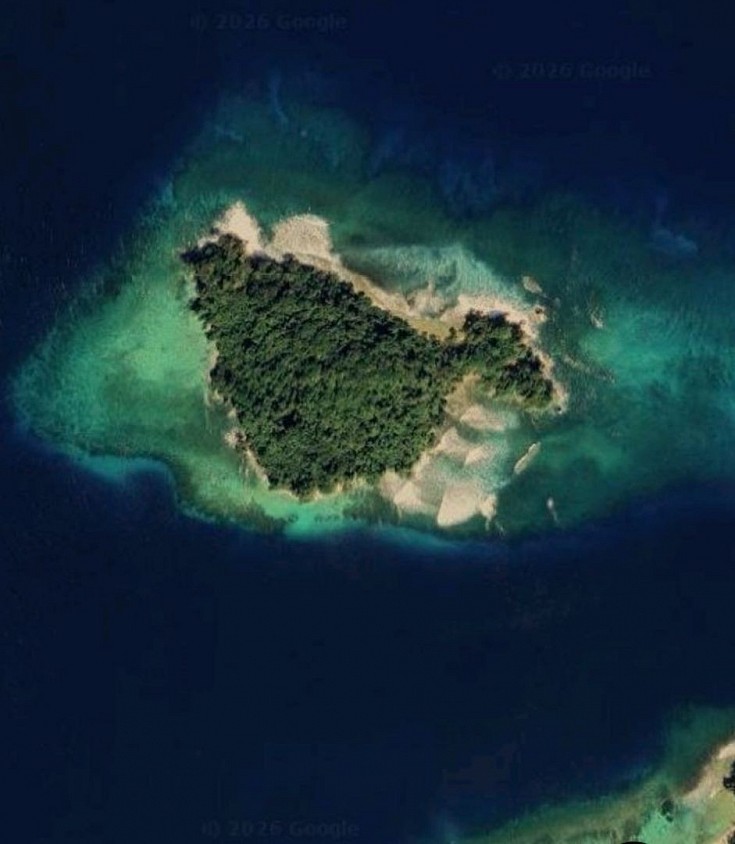
Rau'ahu Island
First Settlement in Rau'ahu Island
According to Michael Horahanua Iuhanramo, an expert local historian of Small Mala’ita, who holds the Title of Ārai land, the first historical known ancestor to have discovered and inhabited the island of Rau’ahu was Poro Ūmenmatara, who was the great-great grandson of Ūtai Saso Ou’ou Masike. Poro Ūmenmatara is reported to have married to Hu’a Nuru’urau, daughter of Poro Haunikara Ou’ou, from Niaraha’u (Sa’a), southern end of Small Mala’ita island, who was probably a chief or a supreme warrior in that region. Poro Ūmenmatara lives in Rau’ahu up to the time of his demise; he was buried in Rau’ahu. Poro Ūmenmatara was able to produce nine children, whose descendants later populated Ārai Peninsula and the surrounding areas. Their names are as follows:
1. Tahemanu Ou’ou
2. Tahemanu Rourohu ***
3. Nari’ai Mane Paina
4. Nari’ai Mane Masike
5. Kawaha (f)
6. Hu’auri (f)
7. Nunu’anawe Paina (f)
8. Nunu’anawe Masike (f)
9. Hu’a Āroniwai (f) ***
In the pre-colonial era, Ārai was a major regional power, and a fierce rival of nearby tribes and kingdoms (called "iora"), of Small Mala'ita, East Are'are, including parts of North Mala'ita and Ulawa island. The Rulers of Rau'ahu ruled most of northern Paurahaomae, and control nearby islands, including, Hauhāri'i (Sail Rock), Ānuta Ni'ia and many of the islands off the coast of Ārai, which are no longer exist today.
According to the Hakimids, the last pre-colonial ruler and great warrior of the Rau’ahu Royal House, particularly in Ārai Peninsula, is said to have been Haimā’i Paina, who is reported to have lost his life during the tribal Battle of Hanuahansia. The historical name ‘Hanuahansia’ (well pronounced as, Hanuahani-si’a) literally mean “place of axe”, depicting Ārai background as a battle field, and reflecting the major traditional tools commonly used in fight – before and during the battle of Hanuahansia.
Hakimids Dynasty, as a revival of the Rau'ahu Royal House, presently holds control of the island of Rau'ahu, including parts of the mainland Ārai, such as Tawaroto (Cordoba) and nearby coasts, and Āhu'i (Istanbul).
Sultanate of Rau'ahu
The Sultanate of Rau'ahu (Tolo: سلطانن رَوْأَهُن, Sultanin Rau'ahun, sometimes Rau'ahu Royal House, is a local sultanate in what is now Ārai Peninsula, centered on Rau'ahu Island in northern Small Mala'ita, Solomon Islands. It was established by the Hakimids, its ruler carrying the title "Sultan" (Authority/Power). Hakimids Dynasty is the revival of the ancient Rau'ahu Royal House, known as Warumanhura'aro, a local kingdom that ruled Ārai Peninsula and which was lapsed with the mertyrdom of Haimā'i Paina, the last Ruler of the Rau'ahu Royal House, during the tribal battle of Hanuahansia, Ārai Peninsula.
Abdul Hakim Nooruddeen Apani'ai (or, Hakim ibn Al-Kindi) is a Muslim scholar and a former Missionary In-Charge of the Ahmadiyya Muslim Jama'at (Community) Solomon Islands (2016–2018).
About eight months after his second marriage, the Hakimids father, Hakim ibn Al-Kindi, son of Al-Kindi (Horahanua Iuhaniramo), assume religious authority in northern Ārai, South Mala'ita, Solomon Islands.
On December 24, 2018, the day he had been sucked from Missionary duty, by Ahmadiyya Muslim Jama'at, Hakim declared himself as the Sultan of an independent Hakimids community, legalizing the Sultanate system as a cultural institution. Under this cercumstances the Sultanate of Rau'ahu was thus established and as a matter of fact it is to be continued far into the future.
In 2012, Hakim visited the island of Rau'ahu (in present-day Ārai Peninsula); since then he had a plan to build his home and settle on the island; he even had this dream eight years earlier as far as 2005. Later in 2018, he had a dream that he was building a huge magnificent Palace on Rau'ahu island. This dream, according to him, was repeated three times. Moreover, Hakim is reported to have seen another inspiring dream about Rau'ahu island, in which he had a converse with Hu'a Nuru'urau, the wife of Poro Ūmenmatara of Rau'ahu. The dream is recorded as follows:
"On Saturday towards morning, 24 June 2023, I had a great dream in which I confronted one of my female ancestors, Hu'a Nuru’urau, the wife of Poro Ūmenmatara of Rau’ahu. She was a light skin woman by nature and tall in status. I had a discourse with her at Rau’ahu island. I was walking up the hill from the seaside (landing bay) and suddenly she appeared and was following me in my rare, shaking her head as an indication of disagreement. Upon this, I continued to plead her until she finally agreed and approached me, and sat with me, about 1 meter, on my left. While we were both conversing, she said to me, 'If you want to see Poro Ūmenmatara, I can then show him to you now; for he is a holy man'. It was at this point that I woke up, pondering over the dream."
It was on the bases of these dreams that Hakim finally made up his mind to settle on the island and administer it under his authority; now his plan to establish the Islamic Centre on the Island is in progress.
In February 2021, Tawaroto (now Cordoba) on the mainland coast, was also claimed by Hakim and immediately established himself in his former ancestral territories.
In December of the same year, Hakim discovered yet another new location, Āhu'i (now Istanbul) where he set up his first resident, known as Sultan Resident, and which would later become an administrative sub-centre.